





Snake in the grass
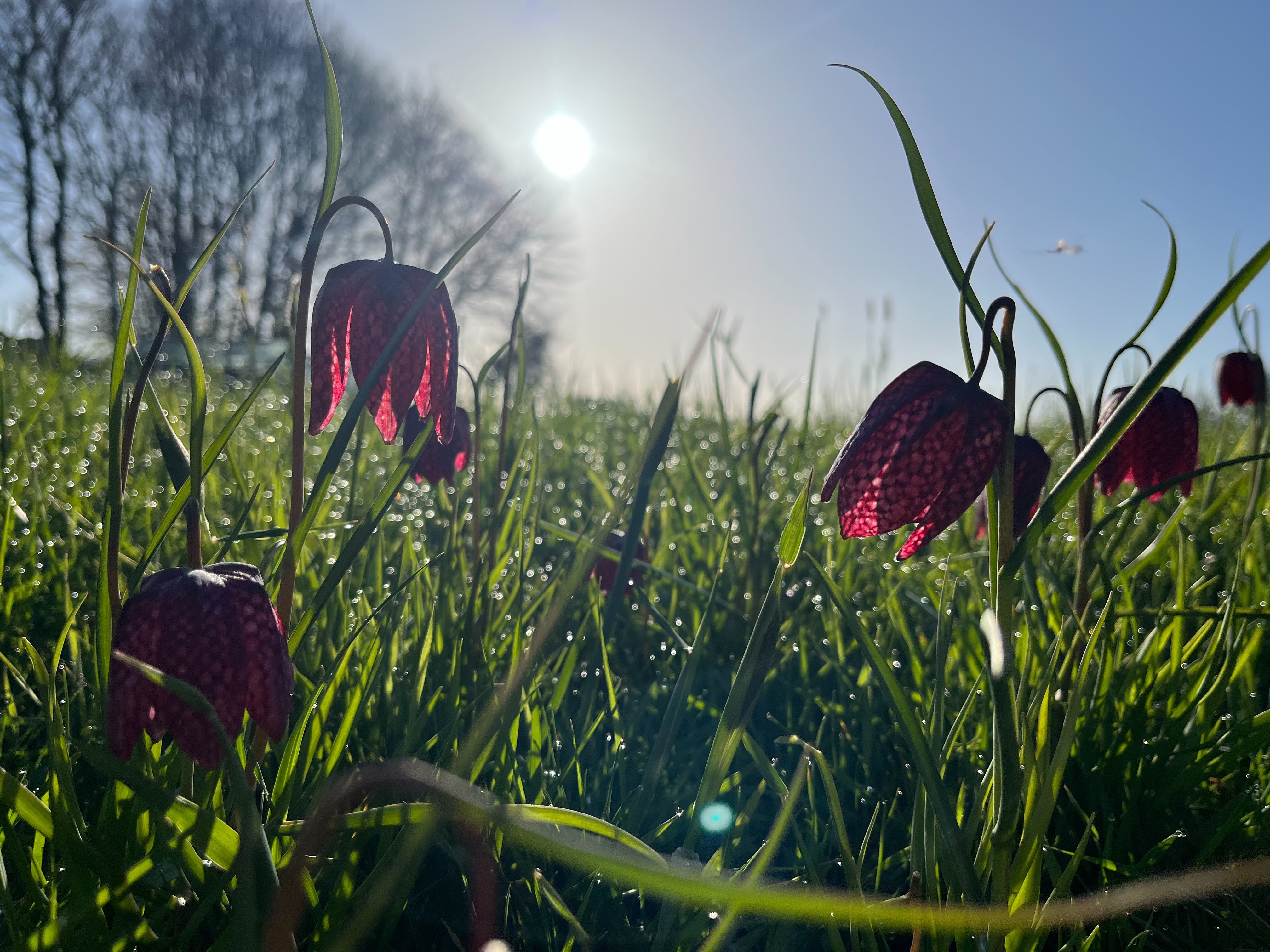
Two years ago we planted several hundred Snakeshead fritillary bulbs in the Genus meadow. Unfortunately they’ve always proved to be a disappointment. With very few flowering we assumed that they were being predated by the local pheasants or by lily beetles which have a penchant for a plump developing flower bud. This year however it’s been a very different story and we've been so happy to see half a dozen swathes each with up to 50 flowers all nodding happily in the spring sunshine.
Snakeshead fritillaries, or Fritillaria meleagris as they are known botanically, thrive in our soil - just a few miles down the road is North Meadow one of the last strongholds of this once common flower. With 85% of the UK population in its 108 acres it’s a stunning sight and really ought to be on the bucket list of any keen gardener, with thousands and thousands of flowers creating a purple sheen to the landscape stretching three quarters of a mile into the distance. Carefully managed the land often floods giving these plants the conditions they thrive in.
If planting them in the garden a damp spot is recommended, though these plants are probably far more adaptable than we give them credit for. In one garden we visit some have self-sown themselves in a hot south facing spot at the base of a dry stone wall. It seems that plants don’t always read the rule book.


