





Fungi
Spring has sprung, birds are singing, and borders are coming back to life with early blooms of snowdrops, daffodils, and winter flowering shrubs. But the slowly rising temperatures have initiated other activity in the garden, where we’ve noticed fungi appearing in the copse and forgotten corners of the garden.
Fungi are around us at any time of the year but warmer wet conditions are where they really thrive. Old tree stumps at Genus HQ are quickly populated by a variety of fungi all searching for the nutrients locked within the wood. Our leaf mould bins rely entirely on fungal activity. Unlike a compost heap that relies on bacterial action a wide range of fungi spread their microscopic hyphae throughout the stacked leaves breaking down the cellulose and lignin into accessible nutrients; a slow process that can take up to three years depending on the type of leaves present.
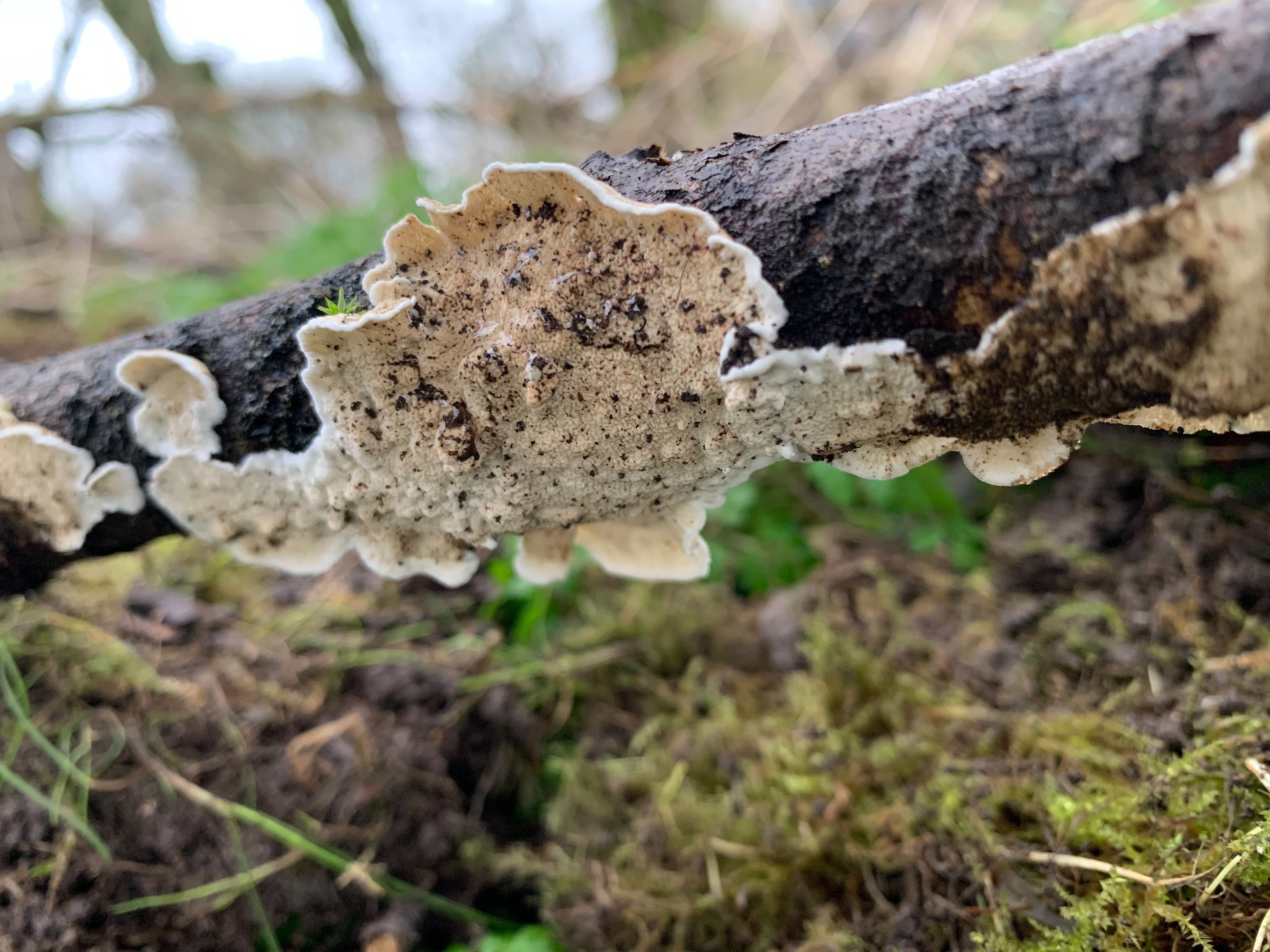
Recent storms have all brought down branches from trees which are quickly colonised by Nettle Crust (pictured) or the beautiful red bowls of Scarlet Elf Caps. The importance of fungi in our soils has been adopted and understood by the ‘no dig’ movement where fungal hyphae are allowed to colonise the soil giving improved soil structure and better nutrient uptake by the plants we want to grow. No longer do gardeners reach for the chemicals when they see fungi thriving in the garden; rather, they're seen as nature's recycling department breaking down dead material and turning it into a valuable resource.


