








Plant of the month - Eurybia divaricata
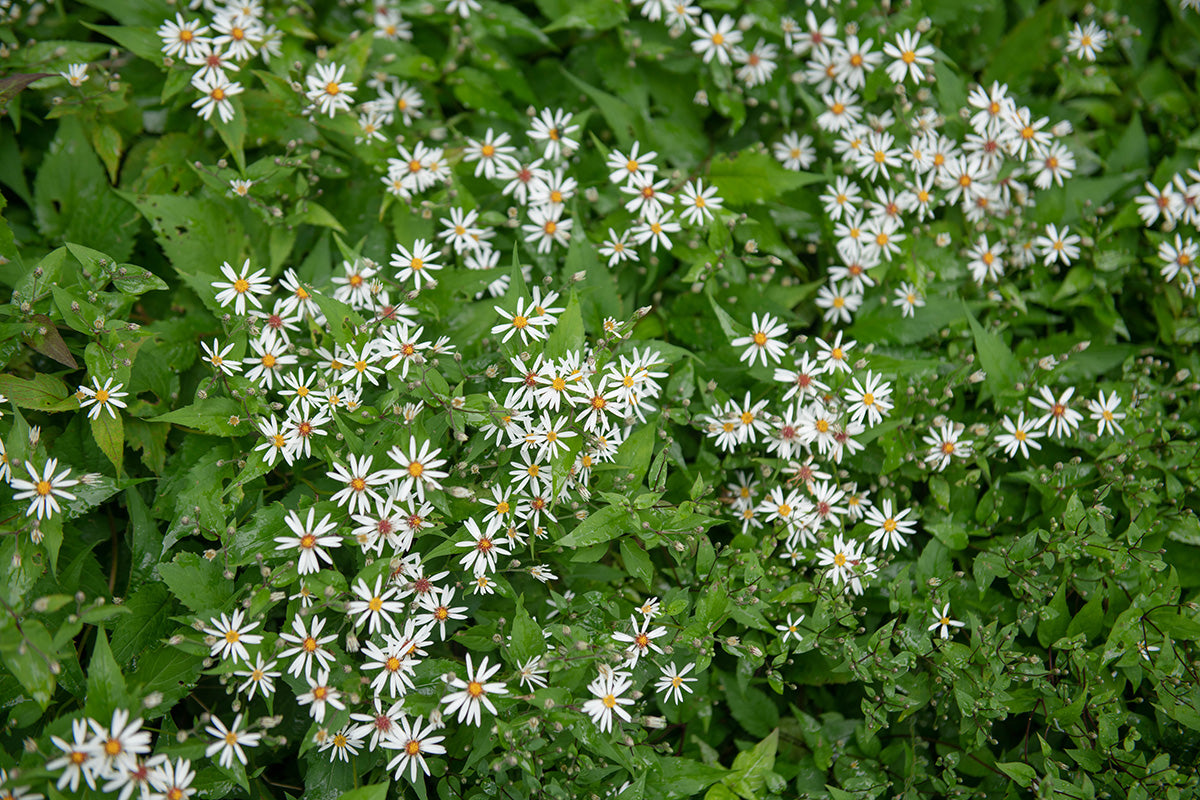
Also known as a white wood aster, this plant is the star of the show in autumn gardens. It has pretty clusters of tiny white daisy-like flowers on black stems from summer into Autumn. It’s fabulous for dry shade and looks great with ferns and the flowing grass Hakonechloa macra.
Eurybia divaricata (previously Aster divaricatus) is in the family Asteraceae that were previously included in the genus Aster. Originating from North America, it was a favourite with Gertrude Jekyll who used it in her own garden amongst bergenias. Eurybia schreberi (Aster schreberi) is similar to E. divaricata with comparatively large foliage and dainty flowers. This is also excellent for dry shade where it forms clumps of fresh, dark green serrated foliage with arching mounds of white daisy flowers in late summer. Team with other late flowering plants such anemone, liriope and persicaria.
Eurybia x herveyi ‘Twilight’ is an elegant plant smothered in lavender-blue flowers with bright yellow centres. Ideal for sun, dappled or partial shade. For best results plant Eurybia x herveyi ‘Twilight’ in well-drained soil in a sheltered, partially shaded site. Cut back hard after flowering.
After flowering, cut the spent stems to the ground and apply a generous mulch of well-rotted garden compost or horse manure around the base of the plant.


