





Cut flower corner - what to pick now
The late summer garden can still be full of colour. There are roses on their second flush, hydrangeas blushing pink and the last of the echinacea, phlox and penstemon taking on a soft faded beauty. Team this with white cosmos, gaura or anemones for pretty freshness and a pop of pretty blue and purple from asters or verbenas.
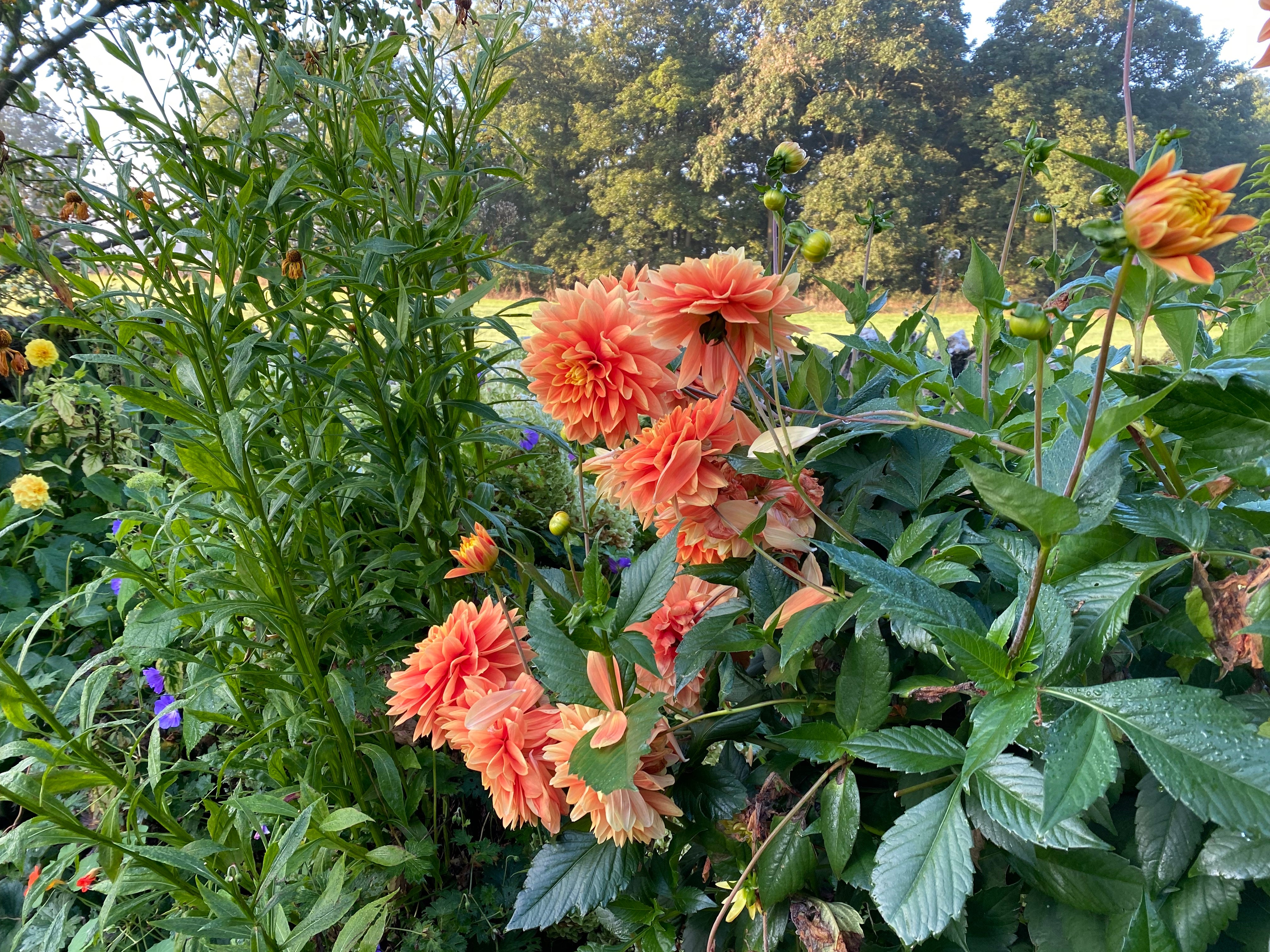
You could also start using the warmer oranges and yellows of autumn with deep orange heleniums and sunny yellow sunflowers (helianthus) and rudbeckia varieties - fabulous with their dramatic dark centres. Late-flowering Solidago ‘Fireworks’ also adds some golden yellow. But if you prefer softer warm tones of pinks, peaches, caramels and creams, there are also lots of lovely dahlias in these shades as well as other mouthwatering options such as caramel coloured sunflower ‘Double Dandy’, russet orange Rudbeckia ‘Sahara’ and Phlox ‘Creme Brulee’ which has a romantic old fashioned look.
Putting together flowers from the garden means they’re fresh, seasonal and local. It’s also a really mindful, creative activity to reward yourself with after a day in the office or a few hours weeding - and you can use your prunings too. Even f you only have one flower variety to spare such as a big jug of orange crocosmia, this can still have great impact. And the good news is that as the temperatures drop, cut flowers tend to last a bit longer.


