






Note 15: Burdock, tree cats, and builder’s tea

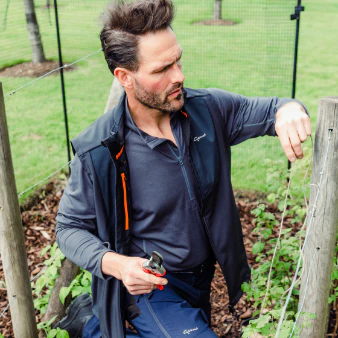
If, like me, you find time between bouts of gardening to make it out into the countryside you’ll find on numerous occasions you return home with hitchhikers clinging to your clothes. Seeds of burdock (pictured) and cleavers, sometimes known as sticky willy or goosegrass attach themselves, sometimes quite determinedly, to your fleece or woollen jumper. This exact scenario played out this week after I returned from a lunchtime wander around the perimeter of a meadow left fallow. With boots full of grass seed and my fleece jacket peppered with the aforementioned cling-ons, my mind started to wander towards the ingenious methods of seed dispersal that plants have developed through millennia of evolution.
My uninvited guests of burdock and cleavers use animal dispersion as their method of increasing their range. Grazing animals naturally come into contact with many plants and with their furry coats many seeds become attached through stickiness or small hooks on their surface. Such is the efficacy of attachment by the burdock seed capsule that in 1941 the idea was adopted by Swiss engineer George de Mestrel and seven years later patented under the name ‘velcro’.
This type of biomimicry through nature has found its place in many human developments including kingfisher’s beaks and the bullet train, humpback whale flippers and wind turbines, termite mounds and passive cooling. Animal dispersion can also be aided by consumption of a fruit and the consequent spread of the seeds through animal droppings.
Wind dispersal is another efficient method plants use for spreading themselves far and wide. There’s the parachute effect of dandelion seeds known as a pappus and the propeller-like effect of maple seeds or samaras, a word that has its roots in pre-Roman, Latin, and 16thC botany.
A famous example of wind dispersal is that of Oxford ragwort. First grown in Oxford Botanic gardens in 1794 the seeds soon utilised the wind to make it over the garden wall and by 1830 had made it to the railway station. At this point the Great Western Railway played its part and the slipstream of the trains soon spread the light downy seeds throughout the country and now, some 230 years later, the plant has been recorded as far north as The Shetland Isles.
Flowing water courses are also a great example of how seeds can be dispersed over great distances. One particularly invasive example are the seeds of Himalayan balsam which employ two methods of dispersal, spreading through ‘explosive’ force and the use of flowing water. Adults and children alike will have enjoyed touching the ripe seed capsules to watch them ‘explode’ and send their seeds flying up to 7 metres in all directions. Explosive dehiscence makes this possible. Swelling outer layers cause the segments to expand but strong seams prevent splitting. Upon ripening these seams weaken until they reach the point where pent up energy is released, throwing the seeds not only onto the ground but into any nearby watercourse where they are swept downstream in the current to colonise new areas. Giant hogweed and American skunk cabbage, both non-natives, benefit from water dispersal. For good reasons it’s illegal to plant either in the wild.
On returning back from my walks, like many, I often head straight for the coffee machine. Even here methods of seed dispersal come to mind. One of the most expensive coffees in the world ‘Kopi Luwak’ can cost over £350 a kilogram, but why is it so special? It seems an African tree cat known as a Civet eats the ripe flesh-covered coffee berries but the seeds, too hard to digest, pass through the animal resulting in droppings packed with ‘polished’ beans. Enzymes within the civet’s gastric juices alter the structure of the beans proteins making the drink smoother and more flavourful to the taste. Somewhat put off by the idea of a coffee, I'm suddenly hoping ‘builder’s tea’ hasn’t gained its reputation for similar reasons. Investigations continue.


Free monthly magazine
The monthly read for gardeners who want to go deeper.
Thirty-odd issues in, Potpourri Magazine is the gardening magazine people forward to their friends. Plant folklore, exceptional gardens, horticultural heroes, and the odd exclusive deal — once a month, free, straight to your inbox.
Free, monthly, unsubscribe any time. No spam, ever.
Something went wrong — please check your email address and try again.
Almost there — check your inbox.
We've sent you a confirmation email. Click the link in it to complete your subscription to Potpourri Magazine.


